Overview
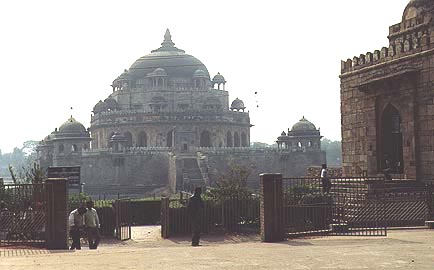
Sasaram (also spelt Sahasram) is a city and the administrative headquarters of Rohtas district in the Indian state of Bihar. Situated on the Grand Trunk Road in the south-western part of the state, it is best known as the burial place of the sixteenth-century Afghan ruler Sher Shah Suri, whose mausoleum is among the finest examples of Indo-Islamic architecture in eastern India.
| Key facts | |
|---|---|
| Country | India |
| State | Bihar |
| District | Rohtas |
| Status | District headquarters; municipal town |
| Region | Southern Bihar plains, near the Kaimur range |
| Notable landmark | Tomb of Sher Shah Suri |
| Major route | Grand Trunk Road (NH-19/NH-2 corridor) |
Etymology
The name Sahasram is traditionally derived from the Sanskrit sahasra-arama, meaning "thousand gardens," and is also linked in local tradition with the legend of the demon king Bali and the sage Parshurama. The shorter spelling "Sasaram" is in common administrative and railway use.
Geography
Sasaram lies in the alluvial plain at the foothills of the Kaimur range, which rises to the south and west of the town. The river Son flows to the east of the district. The location on the Grand Trunk Road, midway between Varanasi and Gaya, has historically given the town its strategic and commercial importance.
History
Early period
The area around Sasaram has yielded evidence of long-standing settlement, including the rock inscription of the Mauryan emperor Ashoka at the Chandan Shahid hill, one of the so-called Minor Rock Edicts. The town was part of successive regional polities, including the Magadha sphere and later the Sultanate of Delhi.
The Suri period
Sasaram rose to prominence in the early sixteenth century as the home of the family of Sher Shah Suri (Farid Khan), founder of the short-lived but influential Sur Empire. After defeating the Mughal emperor Humayun, Sher Shah ruled northern India from 1540 until his death in 1545. He was buried in Sasaram in a domed sandstone mausoleum standing on a terrace in an artificial lake, designed by the architect Aliwal Khan. Adjoining tombs commemorate his father Hasan Khan Suri and his son Islam Shah Suri.
Modern administration
Under British rule, Sasaram was part of Shahabad district. After the reorganisation of districts in Bihar, the new district of Rohtas was constituted with Sasaram as its headquarters. The town has since served as the seat of the district administration, judiciary, and police.
Transport
Sasaram is well connected by road and rail:
- Rail: Sasaram Junction lies on the Howrah–Delhi main line of the East Central Railway, providing direct connections to Kolkata, Patna, Varanasi, Delhi and other major cities. A branch line links Sasaram with Gaya.
- Road: The Grand Trunk Road (now part of the National Highway network) passes through the town, linking it with Varanasi to the west and Dehri-on-Sone, Aurangabad and Dhanbad to the east.
Monuments and tourism
- Tomb of Sher Shah Suri – an Archaeological Survey of India protected monument and the principal landmark of the town.
- Tomb of Hasan Khan Suri – the older Sukha Roza, located nearby.
- Tomb of Salim Shah (Islam Shah) – an unfinished mausoleum in the centre of the town.
- Chandan Shahid hill – site of one of Ashoka's Minor Rock Edicts.
- Rohtasgarh Fort – a major hill fort in the Kaimur range, accessible from Sasaram and historically associated with both Hindu and Afghan rulers.
- Maa Tara Chandi Dham – a Shakti shrine on the outskirts.
Economy
The local economy is based on agriculture, trade and small-scale industry. Rohtas district is part of Bihar's rice-growing belt, and Sasaram functions as a market and service centre for surrounding rural areas. Stone quarrying and processing in the Kaimur foothills, along with cement and allied industries in the wider region, also contribute to the local economy.
Education
Sasaram hosts a number of degree colleges affiliated to Veer Kunwar Singh University, Ara, along with government and private schools, technical institutes and a district-level hospital.
Notable people
- Sher Shah Suri – founder of the Sur Empire, buried at Sasaram.
- Jagjivan Ram – Indian freedom fighter, long-serving Union minister and former Deputy Prime Minister, who represented Sasaram in the Lok Sabha for several decades.
Related topics
- Rohtas district
- Bihar
- Sher Shah Suri
- Sur Empire
- Rohtasgarh Fort
- Grand Trunk Road
- Jagjivan Ram
- Ashoka
References
- Wikidata entity: Q1949410.
- Archaeological Survey of India, listings of centrally protected monuments in Bihar.
- Government of Bihar, Rohtas district administration.
Comments
0 comments
No comments yet.