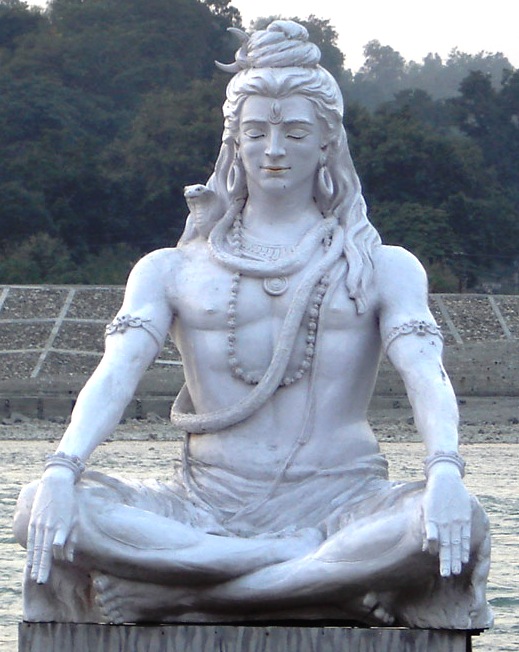
Overview
Shiva (Sanskrit: शिव, IAST: Śiva, "The Auspicious One"), also known as Mahadeva ("The Great God") and Hara ("The Remover"), is one of the principal deities of Hinduism. He is the Supreme Being in Shaivism, one of the major traditions within Hinduism, and is widely revered across the Indian subcontinent and parts of Southeast Asia.
Key Facts
| Name | Shiva (Śiva) |
|---|---|
| Other names | Mahadeva, Hara, Adiyogi |
| Tradition | Hinduism; Supreme deity in Shaivism |
| Role in Trimurti | The Destroyer (alongside Brahma and Vishnu) |
| Consort | Parvati |
| Children | Ganesha, Kartikeya |
| Abode | Mount Kailasa |
| Weapon | Trishula (trident) |
| Aniconic form | Lingam |
| Regions of worship | India, Nepal, Bangladesh, Sri Lanka, Indonesia (notably Java and Bali) |
Theological Position
Within the Shaivite tradition, Shiva is regarded as the Supreme Lord who creates, protects and transforms the universe. In the goddess-oriented Shakta tradition, the Supreme Goddess (Devi) is regarded as the energy and creative power (Shakti) and the equal complementary partner of Shiva. He is also one of the five equivalent deities in the Panchayatana puja of the Smarta tradition.
In the Trimurti, the Hindu trinity, Shiva is identified as The Destroyer, alongside Brahma and Vishnu.
Aspects and Depictions
Shiva is depicted with both benevolent and fearsome aspects. In his benevolent forms, he is portrayed as an omniscient yogi leading an ascetic life on Mount Kailasa, and also as a householder with his wife Parvati and his two children, Ganesha and Kartikeya. In his fierce aspects, he is frequently depicted slaying demons. He is also known as Adiyogi, the first yogi, and is regarded as the patron god of yoga, meditation and the arts.
Iconography
- Vasuki: The serpent king coiled around his neck.
- Crescent moon: Adorning his head.
- Ganga: The holy river flowing from his matted hair.
- Third eye: On his forehead, traditionally said to reduce to ashes whatever it gazes upon when opened.
- Trishula: His trident weapon.
- Damaru: The small two-headed drum he carries.
Shiva is usually worshipped in the aniconic form of the lingam.
Historical Background
Shiva is associated with the Vedic deity Rudra, though scholars have suggested he may have non-Vedic roots as well. He is often described as evolving from an amalgamation of older non-Vedic and Vedic deities, including the Rigvedic storm god Rudra, who himself may have non-Vedic origins, into a single major deity over time.
Geographical Reach
Shiva is a pan-Hindu deity, revered widely by Hindus in India, Nepal, Bangladesh and Sri Lanka, as well as in Indonesia, particularly in the islands of Java and Bali.
Significance
As the Supreme Being of Shaivism, the Destroyer in the Trimurti, the patron of yoga and the consort of the Goddess in Shakta thought, Shiva occupies a central place in Hindu religious life, philosophy, iconography and devotional practice.
Related Topics
- Shaivism
- Trimurti
- Parvati
- Ganesha
- Kartikeya
- Brahma
- Vishnu
- Rudra
- Lingam
- Mount Kailash
- Shakti
- Panchayatana Puja
- Hinduism
References
- Shiva — English Wikipedia
- Wikidata: Q11378
Comments
0 comments
No comments yet.