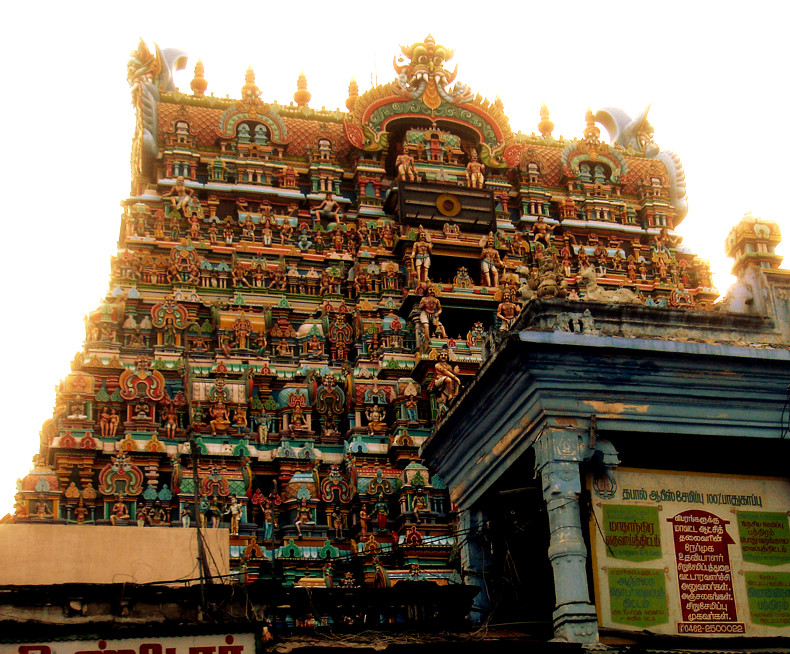
Overview
Tirunelveli, also spelt Thirunelveli and historically known as Tinnevelly, is a city in the southern part of the Indian state of Tamil Nadu. It is the administrative headquarters of Tirunelveli district and lies on the western bank of the Thamirabarani River. The city is one of the oldest continuously inhabited urban centres in Tamil Nadu and serves as a major commercial, educational and religious hub for the southern districts.
Key facts
| Name | Tirunelveli |
|---|---|
| State | Tamil Nadu |
| Country | India |
| District | Tirunelveli |
| Region | Pandya Nadu / southern Tamil Nadu |
| River | Thamirabarani |
| Civic body | Tirunelveli City Municipal Corporation |
| Languages | Tamil (primary) |
| Former name | Tinnevelly (anglicised) |
Etymology
The name Tirunelveli is derived from the Tamil words thiru (sacred), nel (paddy) and veli (hedge or fence), and is associated with a legend connected to the presiding deity of the Nellaiappar Temple, in which paddy is said to have been miraculously protected by a hedge of fire.
Geography
Tirunelveli is located in the plains between the Western Ghats to the west and the Bay of Bengal to the east. The Thamirabarani, one of the few perennial rivers in Tamil Nadu, flows through the city, supporting paddy cultivation and traditional agriculture in the surrounding region. The twin towns of Tirunelveli and Palayamkottai lie on opposite banks of the river and together form the urban core. The city experiences a tropical climate, receiving rainfall mainly from the northeast monsoon.
History
The Tirunelveli region has a long recorded history and was a part of the ancient Pandya kingdom, with the Pandyas exercising influence over the area for several centuries. After the decline of the later Pandyas, the region passed successively under the Chola, Vijayanagara and Madurai Nayak rulers. Local Palayakkarars (Poligars) administered parts of the region during the Nayak and post-Nayak period.
In the 18th century, the Tirunelveli country witnessed the Polygar Wars between the Palayakkarars and the forces of the British East India Company. Veerapandiya Kattabomman, the Palayakkarar of Panchalankurichi, is among the most prominent figures associated with this resistance. Following the consolidation of British power, Tirunelveli became the headquarters of Tinnevelly district in the Madras Presidency and developed as an administrative and missionary centre, with significant Christian missionary activity by the Church Mission Society and others in the 19th century.
Civic administration
The city is administered by the Tirunelveli City Municipal Corporation, which oversees the urban agglomeration including Palayamkottai, Melapalayam, Thatchanallur and adjoining zones. Tirunelveli is also the headquarters of Tirunelveli district and is part of the Tirunelveli Lok Sabha constituency.
Economy
Tirunelveli's economy is built on agriculture, trade and services. Paddy cultivation along the Thamirabarani basin, banana farming and palmyra-based industries are important to the rural hinterland. The city is widely known for Tirunelveli halwa, a wheat-based sweet whose traditional manufacture is closely tied to the water of the Thamirabarani. Other economic activities include cement, lime, textiles, beedi-making in nearby towns, and a growing services sector covering education, healthcare and retail.
Religion and culture
The Nellaiappar Temple, dedicated to Shiva as Nellaiappar and his consort Kanthimathi, is the principal landmark of the city. The temple, with its musical pillars and elaborate mandapams, is one of the major Shaivite shrines of southern Tamil Nadu and was patronised over the centuries by the Pandya, Chola and Nayak rulers. Palayamkottai is notable for its Christian institutions and churches, reflecting the long missionary presence in the area. The region also has significant Muslim populations, particularly in Melapalayam and Kayalpattinam in the wider district.
Education
Tirunelveli, and especially the suburb of Palayamkottai, has historically been a centre of education in southern Tamil Nadu. Notable institutions associated with the city include:
- Manonmaniam Sundaranar University, a state university headquartered at Tirunelveli.
- St. Xavier's College, Palayamkottai, one of the older arts and science colleges in the region.
- Sarah Tucker College, an institution with origins in 19th-century missionary education for women.
- Government Medical College, Tirunelveli.
- Government College of Engineering, Tirunelveli.
Transport
Tirunelveli is a major junction on the Southern Railway, connecting Chennai, Madurai, Kanyakumari, Tiruchirappalli and other cities. Tirunelveli Junction is one of the busiest railway stations in southern Tamil Nadu. The city is served by national and state highways linking it to Madurai, Tuticorin, Kanyakumari and Tirunelveli's coastal hinterland. The nearest airport is Tuticorin Airport, while Madurai and Thiruvananthapuram airports also serve long-distance air travel.
Significance
Tirunelveli functions as the principal urban centre for the southernmost districts of Tamil Nadu, anchoring administration, higher education, healthcare, religious tourism and trade. Its long association with the Pandya heritage, the Nellaiappar temple complex, the Polygar resistance and missionary education gives it a distinctive cultural profile within the state.
Related topics
- Tamil Nadu
- Tirunelveli district
- Nellaiappar Temple
- Thamirabarani River
- Pandya dynasty
- Polygar Wars
- Veerapandiya Kattabomman
- Manonmaniam Sundaranar University
- Palayamkottai
- Tirunelveli halwa
References
- Wikidata entity: Q213248
- Government of Tamil Nadu, Tirunelveli district administration publications.
- Census of India, town and city profiles for Tirunelveli.
Comments
0 comments
No comments yet.